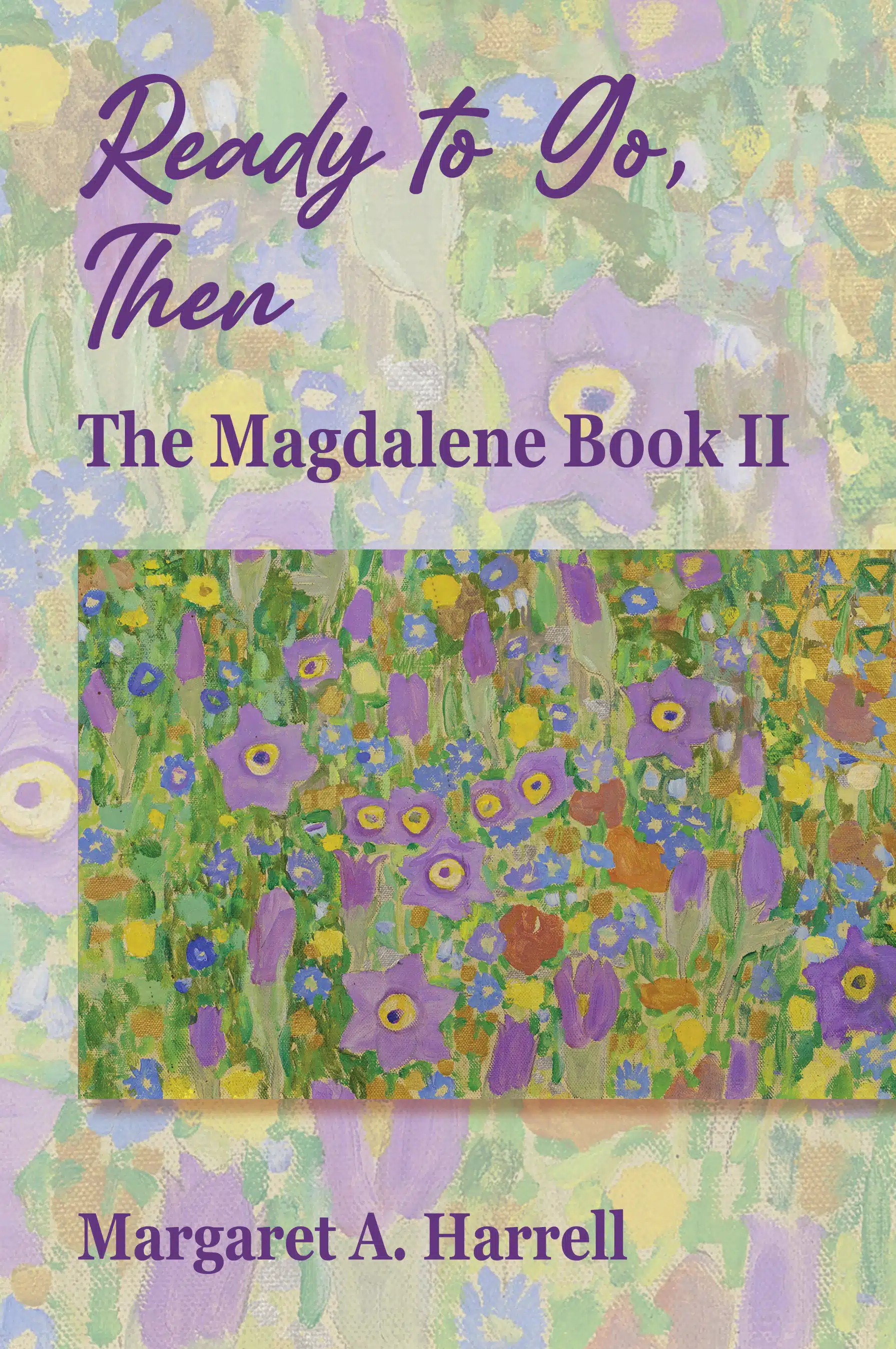
COMING SOON – Out Before Christmas
Love in Transition: Voyage of Ulysses—Letters to Penelope
“Wildly outrageous. Amazing! Wonderful! I thoroughly enjoyed it! I was astonished!” Ron Whitehead
From the FLAP Jacket copy
In the labyrinth of New York City’s Greenwich Village, Robert—a celebrated poet and critic with a genius for language—meets Paula, a brilliant young woman drawn to the light of his mind. His words can capture the meaning of any situation in a nutshell—perfectly phrased, ready to be put into an instant-classic poem or guru’s handbook. Nineteen years apart, they orbit one another in a charged field of intellect, desire, and awakening.
What begins in “hero worship” turns tense, then desperate: an emotional undertow neither can resist. Love becomes initiation, seduction, spirit, voyage.
Across the pages, their charged encounters echo the ancient song of Ulysses and Penelope—recast in a modern key. The sea is now the psyche; the oars are words; just as much at stake as the outward story is the inner voyage. Around them, Anny and Joseph weave a mirror-story of temptation and self-discovery.
Harrell’s prose dismantles boundaries between novel and meditation, myth and Manhattan. Icono-clastic and experimental, her style of writing shatters every boundary it come across. Memorable also are the clipped-word, charged scenes between Robert and Paula. The result is a journey both romantic and transcendent—a new way of telling what love be-comes when consciousness itself is dramatically evolving, sitting on the hinges of an unknown soul intent.
In a soaring surprise move, Volume III shifts to a brand-new location, the Christ State, which has been hinted at all along. Robert introduces Paula to it, initiating the reader along with her. What is the Christ State? Where is it? In Volume III, find out. Some readers report Harrell’s books are “psycho-active; that is, if they resonate with the energy, they might find it “broadcasted” to them.
With a voice “that ”—says Daniel O’Bailey, “rings like a punchy snare drum with slap-back delay in every word,” she catches and reshapes life, testifying to the peril and radiance of transformation through love.
First published in Sibiu, Romania, this series had the essential help of the publisher, author/professor and friend, Didi-Ionel Cenuser, who sat with me long hours at the computer in 1996, getting the disc ready, then the film scans. Also, Mircea Ivanescu cheered me on and Ion Mircea took over the printing of volume III.
Reviews
The Series
“Beyond Homer and Ulysses and Penelope and Shakespeare and Ibsen and James Joyce and Samuel Beckett, beyond the Nouveau Roman writers Michel Butor and Alain Robbe-Grillet, beyond the anti-novel the experimental novel, beyond postmodernism, beyond chronology plot and character, beyond Freud and Jung and their disciples, beyond Kierkegaard and existentialism, beyond Christianity and all religions, beyond Einstein and modern science, beyond quantum physics, towards a new fluid turbulence, a galaxy formation, a fractal wholeness, a new literature, a new art, a new way of expressing what has never been expressed, beyond thought, towards new ways of expressing inner and outer experience, beyond phenomenology, beyond the Book of Revelation, towards the birth of a new all and everything, towards a new alpha and omega, comes a new Mary Magdalene comes Margaret A. Harrell’s LOVE IN TRANSITION, Voyage of Ulysses: Letters to Penelope, an unanticipated masterpiece.”
—Ron Whitehead, U.S. National Lifetime Beat Poet Laureate
Love in Transition I
“This marvel of a post-novel novel breaks down the barriers between poetry and prose, among the natural, the human, and the supernatural, between fact and imagination, between writer and reader, and does it painlessly, pleasurably.”
—George Stade, Columbia University professor, Consultant Barnes & Noble author, Confessions of a Lady-Killer
“It was not only Hemingway you went to see at the Dôme Restaurant; it was Charlie Beaudelaire, discovering the unconscious link with his poem ‘Le Gâteau.’”
—Eugène Van Itterbeek, poet, professor, “Lucian Blaga” University, Romania
“You/I sat together in pulsing Source.”—Soul Infusionist, California
“From when I first again saw her, in 1983, until the present, I have watched Margaret devote her life to her project, the first part of which is printed here. Poetry and metaphysical vision, Love in Transition is the cry through Margaret’s soul to the twenty-first century. Highly recommended for its vision, fierce intelligence and great literary merit.”—Virginia Parrott Williams
Author, Surrealism, Quantum Philosophy and World War I, Coauthor, Anger Kills
“Margaret Harrell’s Love in Transition I has that quality of ‘logical, integrated thought’; it is always in control of its widely diversified factual and imaginative material. I only wish that I could read it with a small class as I repeatedly did James Joyce’s UIysses.”—Harold Parker
Late decorated professor, Duke University, Author, Three Napoleonic Battles
Love in Transition III
“Like a female Joyce, Margaret A. Harrell is attracted by the etymologies that can substitute for the logos; therefore, fascinated by the concavities of notions, which can substitute for the nonspaciality of the logos.”
—Ion Mircea, Winner of the 2012 “Mihai Eminescu” National Poetry Grand Prize (for his complete works).
“I should think this book is really an exceptional effort in the development not only of poetry in our century (and the next ones) but in human consciousness.”
—Mircea Ivănescu, Winner of the 1998 “Mihai Eminescu” National Poetry Grand Prize (for his complete works)